Suburb profile · Newcastle East
Newcastle East is the most walkable coastal address in the city. Compromise is the price of entry.
The typical unit sits around $1.95M and the typical house around $2.40M, and neither has posted a negative year in the cycle. Newcastle East is a heritage-and-ocean micro-market where the location is never really the question, the building is. Almost everything here involves a compromise: a shared wall, a tight footprint, a heritage control, a strata scheme, salt exposure. The skill, and most of what a buyers agent in Newcastle East is for, is knowing which of those compromises you can live with and which one quietly wrecks the resale.
The short version
Newcastle East is scarce, walkable, heritage coastal Newcastle: a 9-out-of-10 socioeconomic pocket where houses have averaged around 7.5% growth a year over the decade with no negative years, and units have grown every year too. It is a units-and-terraces market, not a family-house one, and the value lives at the building level. Parking, strata condition and salt exposure decide the buy far more than the postcode ever could.
A terraces-and-units market, not a family-house one
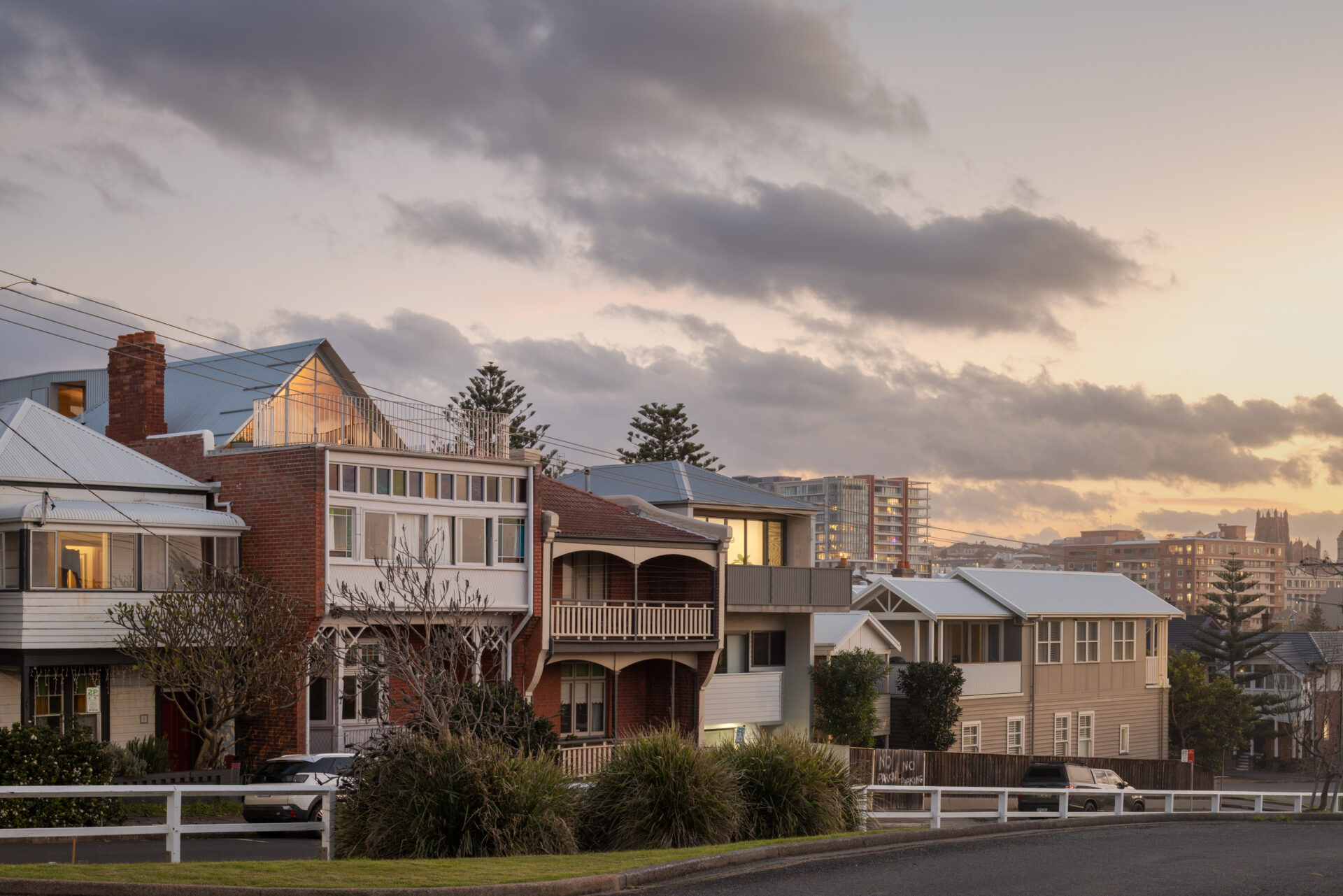
Newcastle East is not a conventional house suburb. The heritage landscape is two and three-storey terraces from the mid-19th to early-20th centuries, some single-storey period cottages, rows of public housing, and a strong apartment concentration around Shortland Esplanade, Telford, Scott and Zaara Streets, with a small number of exceptional larger homes. Detached houses barely trade, and tellingly, the single most expensive sale in the suburb was not a house at all but a beachfront unit at $6.175M, with a house at $4.9M behind it. The demand data makes the point plainly:
There is also a genuine tenure mix here, with public housing around 18.5% of dwellings woven through the heritage-attached stock. As everywhere, that is a comping instruction, not a character judgement: value a property against its own building and street, not the suburb average, because condition, parking and scheme quality vary enormously across near-identical-looking terraces.
Houses that just don't stop, units that never stopped either
Track the speed of growth rather than the price and Newcastle East is remarkably orderly. Houses have grown every single year in this series, in a tight band between roughly 6% and 9%, one of the steadiest strong growers in the city, which is exactly what extreme scarcity plus heritage protection tends to produce. Units have also never had a negative year, climbing from around 3% a year early in the series to the mid 6s more recently.
The steadiness is the story, but it is also the trap: a chart this smooth can lull you into thinking any purchase here is safe. It is not. The suburb average is orderly precisely because the good buildings hold up and the bad ones quietly do not, and the median smooths right over the difference.
The best of it never gets listed
Supply is genuinely tiny and heritage protection caps how much new stock can ever appear, so the best terraces, the parked apartments and the rare good house change hands quietly, on relationships, before a campaign starts. Here is the part that matters for you: when we are actively engaged on a brief, we see around 95% of the stock before it goes online. In a market this small, if the right one is already on realestate.com.au, you are often too late.
What buyers get wrong in Newcastle East
Parking is the big one, and it is structural. Beach and city visitor demand makes street parking brutal, and a property without a genuine car space cannot always be fixed later, so buyers who need two easy spaces should treat that as a hard filter, not a nice-to-have. The second is buying the romance and skipping the strata report on an older coastal building, where salt, concrete, balustrades, windows, waterproofing and lift replacement can turn a cheap purchase into an expensive hold. The third is heritage and archaeology: alterations, excavation and additions can be materially more complex here than elsewhere. And the fourth is wind and outdoor usability, an oceanfront balcony that is unusable in a common southerly is not the asset the photos suggest.
What's changed, and what's coming
Newcastle East's value driver is public realm plus permanently constrained supply, not rezoning. The South Newcastle Beach section of Bathers Way is complete, upgrading the shared path, beach access, skate facilities, lighting and landscaping, and the City is still designing the King Edward Park section that will connect the coastal path through the Hill and Newcastle East interface. Heritage controls limit wholesale replacement in the key streets, which preserves the character that makes the suburb scarce and, at the same time, caps how much anyone can change a given site.
The part the data can't price
The numbers explain the scarcity. They do not explain the mornings. Newcastle Beach and Nobbys are a short walk, the Ocean Baths, Fort Scratchley, Nobbys Breakwall and the Bathers Way are on the doorstep, and coffee runs on Estabar, The Kiosk and Rustica. The light rail on Scott Street connects to the Newcastle Interchange, so many residents genuinely live on foot, and most of the old city sits within one to two kilometres. Newcastle East Public School is the local primary, though you should verify the secondary catchment by address. It is the closest thing Newcastle has to a European old town, which is exactly why so little of it ever comes up for sale.
Get the number we'd pay in Newcastle East
Tell us what you're after. We'll tell you, honestly, what it's worth and whether we can beat the valuation. If we can't, you won't hear a sales script.
Newcastle East buyers, the questions everyone asks
Is Newcastle East a good place to buy property?
If you want the most walkable coastal address in the city and you go in with your eyes open, yes. Newcastle East is a heritage-and-ocean micro-market: a 9-out-of-10 socioeconomic pocket where houses have averaged around 7.5% growth a year over the decade without a single negative year, and units have grown every year too. The catch is that scarcity here means compromise is normal. The skill is knowing which compromises to accept and which to refuse.
How much do you need to buy in Newcastle East?
As at Q3 2026 the typical unit sits around $1.95M and the typical house around $2.40M, though very few houses trade, so the house figure is drawn from a thin market. In practice about $1.5M is entry level: the cheapest sale in the past year was a two-bedroom unit at $910,000, but almost nothing else traded under $1.5M. The premium end starts above $3M and runs a long way, the top recent sale was a beachfront unit at $6.175M, with a house at $4.9M behind it. An ocean or harbour outlook, a genuine car space and a sound building push a property well above the median; a compromised strata scheme or no parking pulls it well below.
Houses or units in Newcastle East?
This is really a units-and-terraces market, not a detached-house one. Houses have been the steadier, stronger grower, never a negative year, but they rarely come up. Units are where most of the buying happens, and they have also grown every year while climbing from around 3% a year early in the series to the mid 6s more recently. But a unit here is a building decision first: strata history, salt and concrete remediation, waterproofing, lift and parking matter more than the suburb median.
What are the best streets in Newcastle East?
Parnell Place and the Fort Scratchley and Nobbys side carry the premium scarcity: historic streetscape, tiny supply and genuine place identity, though many houses are compact so parking and layout decide it. Zaara Street, Telford Street and Stevenson Place are strong but building-specific, with good Newcastle Beach access. Shortland Esplanade is the oceanfront view premium, and the one that needs the heaviest diligence on wind, salt, strata and concrete. The Scott Street edge is more urban and car-light, excellent if you barely drive.
Source: HtAG Analytics, typical values as at Q3 2026. Growth p.a. is the 10-year average annual change in typical value. The Newcastle East house market is thin, so house typical prices are indicative.
See also: buying across Newcastle, Newcastle purchases we've made, what a buyers agent costs, and how we buy in neighbouring The Hill, Cooks Hill and Bar Beach.