Suburb profile · Cooks Hill
Cooks Hill is one postcode wearing several different suburbs.
The typical Cooks Hill house is about $1.879M, up about 6.8% a year on average over the past decade, and it changes hands in roughly 24 days on about 2 months of stock. Useful at a dinner party, useless for actually buying, because there isn't one Cooks Hill market. A two-bedroom terrace with no parking, a 500sqm family home on Bruce Street, and a student rental near the housing commission all sit under the same postcode and trade like different suburbs. Knowing which is which is most of what a Cooks Hill buyers agent is for.
The short version
Cooks Hill is blue-chip, tightly held inner-city Newcastle: a 10-out-of-10 socioeconomic pocket where homes are kept about 11 years, selling in around 24 days on roughly 2 months of stock, with vacancy near 1.46%. Houses have grown for 15 years without a single negative year. The catch is that "Cooks Hill" is really several markets at once. Terrace or family home, house or unit, near Centennial Park or near the commercial edge, the street and the floorplan decide the return, not the postcode.
One postcode, several different buys
Cooks Hill is small and it varies enormously street to street. At one end there are big luxury family homes, think 500sqm four-bedroom houses with parking and the occasional pool, centred on Bruce Street near Centennial Park. Then there are the larger three and four-bedroom terraces, some with parking, some without, and the two-bedroom terraces with no parking at all. Apartments are a smaller part of the mix and sit mostly along Darby Street. Layered through it are aged care, high-density zoning, and a public-housing concentration that runs at about 14.6% of dwellings. Same suburb, completely different assets.
That mix pulls in three different buyers: the family or downsizer chasing a renovated terrace or a home near the park, and the investor after a two-bedder leased to students or young professionals who want to be walking distance to town. The data backs it up. Here is where the depth of demand actually sits:
Look at the top two. The strongest demand is for three-bedroom houses, the family and downsizer end, but two-bedroom units are second, the investor and young-professional end. Two completely different buyer pools competing in the same tiny suburb, which is a big part of why it stays so tightly held.
And even a single line on that table hides enormous variation. A "three-bedroom" in Cooks Hill might be a renovated freestanding house with parking backing a park, or a non-renovated terrace with no parking facing the commercial edge, or a semi, or a unit. Same bedroom count, same suburb, wildly different price and a completely different buy. That is exactly why a typical value per bedroom would mislead you here more than it helps. In Cooks Hill the specific house, its parking, its aspect and its street matter more than any average ever could.
Houses here just don't go backwards
Track the speed of growth rather than the price, and the standout is how steady the houses are. Cooks Hill houses have not posted a single negative year in this entire series, 15 years without going backwards, with the softest year still positive at 1.9% in 2023 and peaks near 12.5%. Units are a touch more volatile: strong over the long run, but with one negative year in 2019 and bigger swings around it. Steady is the whole story here.
That consistency is the argument for Cooks Hill houses, and the ten-year growth of 92.58% is the receipt. But the unit line comes with the usual catch: it is close to meaningless until you know the building and the street. A tired apartment on the wrong part of Darby Street is a different asset to a renovated one near the park, same "unit" label, opposite trades. The chart tells you the type. Only the street tells you the buy.
The best of it never gets listed
Stock is genuinely tight and it clears fast: about 24 days on market, only around 2 months of supply, and stock on market near 0.15%, with vacancy holding around 1.46% and homes typically held about 11 years. When a suburb this small trades this quickly, you rarely get a second look at the right house, which is exactly when buyers overpay in a panic or miss it entirely.
So the best of it often never reaches a portal. The strongest terraces and family homes here frequently change hands quietly, on relationships, before a campaign starts. Here is the part that matters for you: when we are actively engaged on a brief, we see around 95% of the stock before it goes online. A lot of what you eventually scroll past on realestate.com.au and Domain, we had already walked through. If it is on the open market, you are often already too late.
What buyers get wrong in Cooks Hill
They treat the postcode as the decision. In a suburb this mixed, that is how you overpay. Bruce Street and the pocket around Collette near Centennial Park trade in a different league, the premium end runs to circa $3.7M, with top sales of $3.86M in 2023 and $3.66M in 2026, while the stretch toward Brook Street, where Cooks Hill meets its commercial and industrial edge and the public-housing concentration sits, is a different market again. The second trap is parking, or the lack of it: a two-bedroom terrace with no off-street parking is a real liveability and resale constraint this close to the city, and plenty of buyers wave it through. The third is buying a tired investment on price alone. And for families, the local catchment scores only about 53 out of 100, so many lean on the alternatives nearby: Newcastle Grammar School, the Cooks Hill campus of the Hunter School of the Performing Arts, and Alesco Secondary College. None of that shows up in a median. All of it shows up at resale.
The part the data can't price
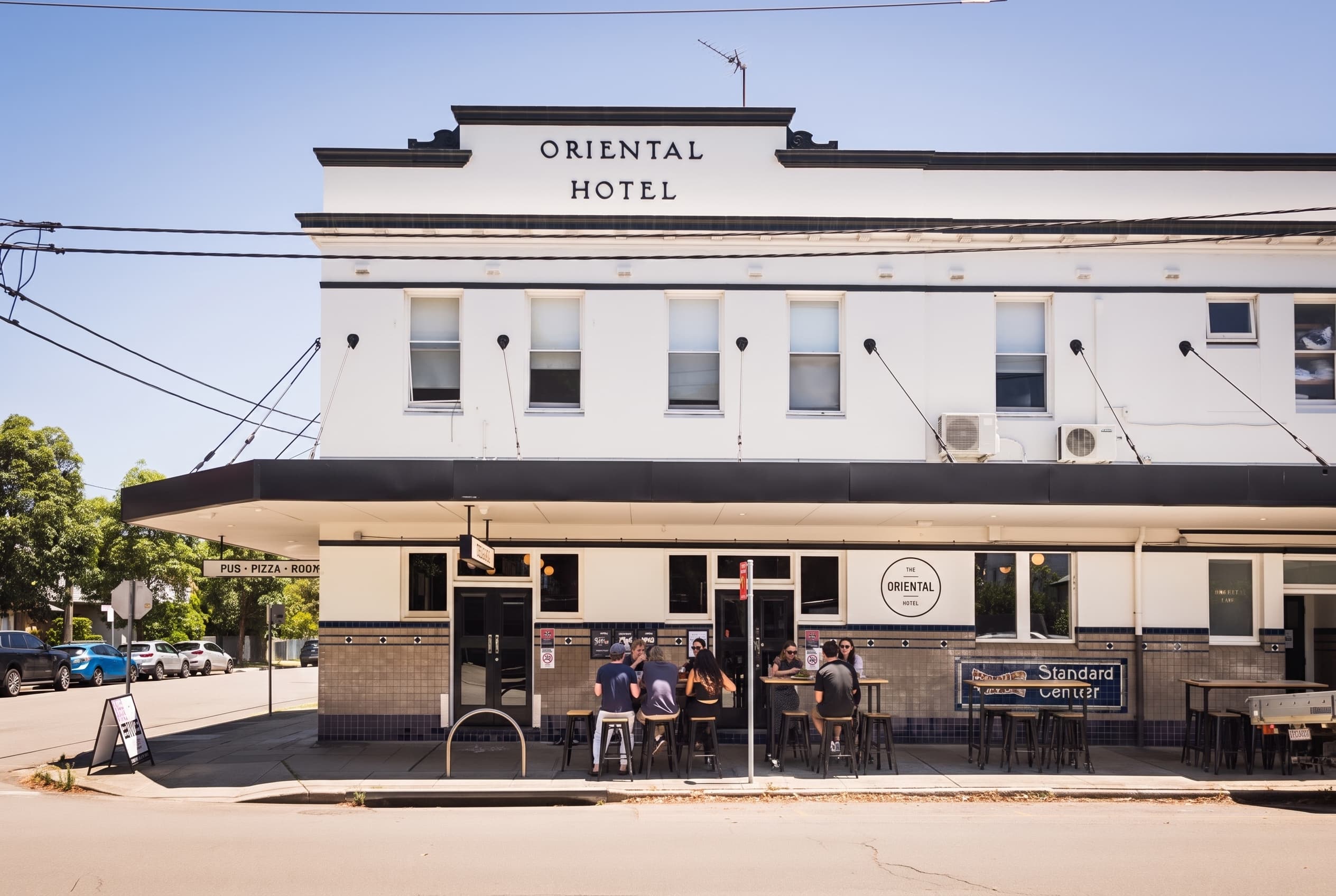
The numbers explain why Cooks Hill holds its value. They do not explain why people fight to live here. This is Newcastle's eat street: Darby Street runs about 25 restaurants and cafes with alfresco dining, Indian, Thai, Chinese, bars and cafes, with Harris Farm around the corner. The corner pubs are institutions, the Oriental Hotel with its live gigs and its Ori Pizza, the Commonwealth, and the Cricketers Arms. You have Centennial Park, Gregson Park and Nesca Park, the Newcastle Art Gallery and the Library on Laman Street, Lowlands Bowling Club, tree-lined streets of Victorian terraces and timber cottages, and the CBD a short walk away. It is the closest thing Newcastle has to genuine inner-city living, and that is exactly why demand here sits permanently ahead of a very small supply.
Get the number we'd pay in Cooks Hill
Tell us what you're after. We'll tell you, honestly, what it's worth and whether we can beat the valuation. If we can't, you won't hear a sales script.
Cooks Hill buyers, the questions everyone asks
Is Cooks Hill a good place to buy property?
For the right buyer, yes. Cooks Hill is blue-chip inner-city Newcastle: a 10-out-of-10 socioeconomic pocket, tightly held with homes kept about 11 years, and houses have grown steadily for 15 years without a single negative year in the cycle. The typical house is around $1.879M, up about 6.8% a year on average over the past decade, selling in about 24 days on roughly 2 months of stock. But Cooks Hill is tiny and it changes block by block. The street and the dwelling type decide whether you actually do well, not the postcode.
How much do you need to buy a house in Cooks Hill?
The typical Cooks Hill house sits around $1.879M as at Q3 2026, and realistically you are unlikely to buy a house here under about $1.2M anymore. As a rough ladder, using realestate.com.au medians: a two-bedroom house around $1.36M, a three-bedroom about $1.82M, a four-bedroom near $2.2M, while the premium end trades circa $3.7M (the top recent sales were $3.86M in 2023 and $3.66M in 2026). Units run from about $655k for a one-bedroom to roughly $1.24M for a three-bedroom. Treat these as anchors, not prices: a renovated freestanding three-bedroom with parking near the park and a non-renovated terrace with none are both "three-bedroom houses" at very different numbers.
Houses or units in Cooks Hill?
Houses have been the steadier performer here, never a negative year in the entire series, and three-bedroom houses are the most in-demand dwelling type in the suburb. Units are a touch more volatile, with one negative year in 2019, but two-bedroom units are the second-strongest demand in Cooks Hill, driven by investors and young professionals who want the inner-city location. Either way, the building and the street decide it, a tired student rental is a different asset to a renovated terrace at a similar price.
What are the best streets in Cooks Hill?
The luxury family-home end centres on Bruce Street and around Collette, larger homes near Centennial Park. For walk-to-town terraces, the closer you sit to Bull Street and Laman Street the better. The pockets to price carefully are toward Brook Street, where the suburb starts to meet its commercial and industrial edge, and around the public-housing concentration. Two streets apart can be two different buys, which is exactly where a local buyers agent earns the fee.
Source: HtAG Analytics, houses unless noted, typical values as at Q3 2026. Growth is change in typical value over the prior 12 months.
See also: buying across Newcastle, Newcastle purchases we've made, what a buyers agent costs, and how we buy in neighbouring The Junction, Bar Beach and The Hill.