Suburb profile · Adamstown
Adamstown is a family-house market sitting right beside a station-led building boom.
The typical house sits around $1.34M and has averaged about 6.5% growth a year over the decade. Adamstown gives you inner-Newcastle access at a clear discount to The Junction or New Lambton, but it is genuinely a two-speed suburb. On one side, quiet family streets with real land. On the other, a transport-oriented building boom around the station and Brunker Road. They grow differently, they attract different buyers, and pricing one off the other is the fastest way to overpay. Knowing which Adamstown you are actually buying is most of what a buyers agent in Adamstown is for.
The short version
Adamstown is a deep, active middle-ring market with genuine inner-Newcastle access, a 8-out-of-10 socioeconomic rating and houses averaging around 6.4% growth a year over the decade. It is also two markets at once: quiet family-house streets, and a station-and-Brunker-Road infill boom driven by transport-oriented zoning. The family street and the station-side apartment are different products with different growth and different risks. Comp them separately.
Two markets, running at different speeds
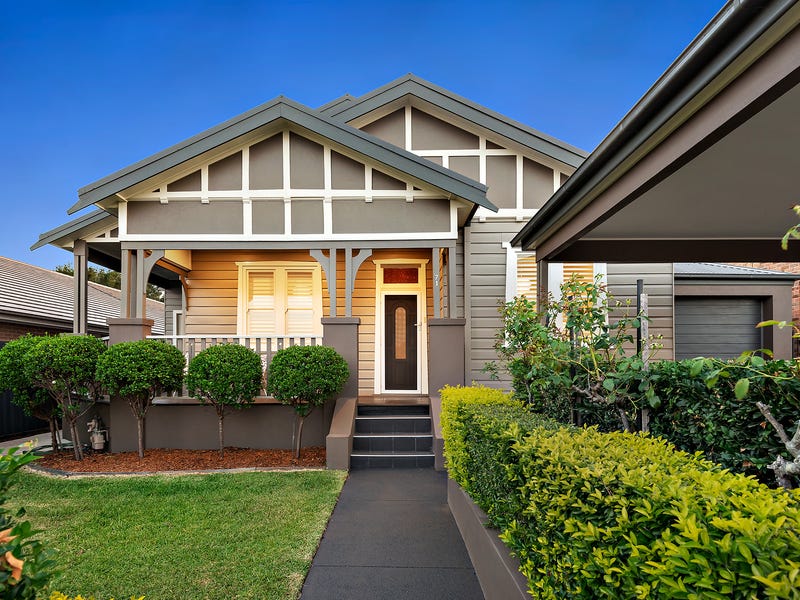
Around 68% of Adamstown is detached houses, with roughly 17% semis and 15% apartments, and that apartment share is rising fast along the station and Brunker Road corridor. The stock runs from Federation, inter-war and mid-century houses on useful blocks, through townhouse and duplex infill, to newer apartments on Brunker Road and Date Street and older walk-ups on the main roads. The demand data shows the two speeds better than any description:
Three-bedroom houses are the most-traded product, and two-bedroom units are right behind them. That is the whole suburb in one chart: the family-home market and the transit-oriented market, running side by side. A quiet-street house and a station-side apartment are not comparable sales, and treating them as if they were is exactly how buyers get Adamstown wrong. The full range runs from entry-level units around $600,000 to a top house sale of $3.3M, which is why the suburb average tells you so little on its own.
Cyclical, and currently on the way up
Track the speed of growth rather than the price and Adamstown reads as a proper cyclical middle-ring suburb. Houses dipped around 2018 and 2019, then ran hard through the boom, over 20% in 2021, softened again into 2023, and have turned back up strongly since, rising about 11.7% in the past year. Units have been the steadier line through the same period. Read any single year on its own and you will draw the wrong conclusion; the decade averages out to around 6.4% a year for houses.
The best of it never gets listed
Stock is tight and moves steadily: about 28 days on market, only around 1.17 months of supply, stock on market near 0.29%, vacancy about 1.29%, and homes held roughly 9.9 years. The scarce product here is the good family house on a larger, quiet block, and a lot of that trades quietly, on relationships, before a campaign starts. Here is the part that matters for you: when we are actively engaged on a brief, we see around 95% of the stock before it goes online. A lot of what you eventually scroll past on realestate.com.au and Domain, we had already walked through.
What buyers get wrong in Adamstown
The biggest mistake is treating the station as a blanket positive. Transport-oriented development does not lift every property equally: it can add land and redevelopment value to some sites while adding construction, density and overlooking risk to their neighbours, so being near the station cuts both ways. The second is paying quiet-street house pricing on a Brunker Road or Glebe Road frontage, or on a rail-adjacent block, where traffic and noise are real. The third is buying an older apartment without pricing in the new supply coming through the corridor, which competes on lift, parking and energy efficiency. And parts of the wider Cottage Creek system touch Adamstown, so check flood for the specific lot rather than assuming.
What's coming, and it's real
Adamstown Station is officially part of the NSW Transport Oriented Development program, with controls applying since May 2024 to mapped land within about 400 metres of the station, and City of Newcastle is doing place-based planning through 2026 to refine how that growth happens around heritage, flood and environmental constraints. This is a genuine medium-term catalyst: expect more apartments and attached housing near the station. But do not read it as the whole suburb being rezoned for six storeys, the effect is highly location-specific, which is exactly why the exact lot matters more here than the suburb name.
The part the data can't price
The numbers explain the value. They do not explain the everyday of it. Adamstown runs on the Fernleigh Track, one of the region's best cycling and running assets, with Local Customs on Glebe Road and the Fernleigh Cafe as local anchors. Brunker Road handles the everyday shops and services, and Westfield Kotara is a short drive for everything else. Adamstown Public School is the local primary, though verify the exact catchment by address. The CBD is roughly 5 to 6 km by road, with the train as a genuine alternative to driving. It is the sweet spot a lot of buyers actually want: a real house, close in, without the coastal or village premium.
Get the number we'd pay in Adamstown
Tell us what you're after. We'll tell you, honestly, what it's worth and whether we can beat the valuation. If we can't, you won't hear a sales script.
Adamstown buyers, the questions everyone asks
Is Adamstown a good place to buy property?
For a lot of buyers, yes. Adamstown gives you inner-Newcastle access at a clear discount to The Junction or New Lambton, with a deep, active market and houses that have averaged around 6.5% growth a year over the decade. The important thing to understand is that Adamstown is a two-speed suburb: quiet family-house streets on one side, and a station-and-Brunker-Road building boom on the other. They are not the same buy, and they should not be priced off each other.
How much do you need to buy in Adamstown?
As at Q3 2026 the typical house sits around $1.34M and the typical unit around $766,000. By size, houses run from about $984,000 for a two-bedroom to $1.30M for a three-bedroom and $1.73M for a four-bedroom. Units start low: entry is around $600,000, the cheapest recent sale was a rundown one-bedder at $475,000 and a good one-bedroom is closer to $650,000. The premium house market begins around $2M, with $2.5M the genuine top end; the most expensive house traded at $3.3M back in 2022, and a block of units once sold for $4.25M.
Houses or units in Adamstown?
Both markets are genuinely active here, which is unusual. Three-bedroom houses are the single most-traded family product, and two-bedroom units are almost as heavily traded, driven by the station. Houses have been the more cyclical performer, with a real dip around 2018-19 and then a strong run; units have been steadier. The catch on units is supply: the transport-oriented zoning means more new apartments are coming, so older stock needs a clear price advantage over the new.
What are the best streets in Adamstown?
The quieter residential streets with larger blocks, South Street and Fletcher Street among them, carry the family premium. Price carefully on the Brunker Road and Glebe Road frontages and on rail-adjacent streets, where traffic and noise are real, and treat the Date Street and station-side pocket as a different, transit-oriented product rather than a quiet-house comparable.
Source: HtAG Analytics, typical values as at Q3 2026. Growth p.a. is the 10-year average annual change in typical value (10-year total 87.09%).
See also: buying across Newcastle, Newcastle purchases we've made, what a buyers agent costs, and how we buy in neighbouring The Junction, Hamilton South and Cooks Hill.