Market breakdown · Lake Macquarie
Why we keep buying in one Lake Macquarie corridor.
Cooranbong, Morisset and Bonnells Bay sit side by side at the southern end of Lake Macquarie, and we've bought five properties across them. Not because they're cheap. Because the same three forces line up in all three: supply collapsing, a population wave that's barely started, and a government-designated growth centre at the middle of it. This is the full case, with the data and the actual purchases.
Where it is: the three suburbs sit together at the southern end of Lake Macquarie, on the main Sydney-to-Newcastle rail line, about 40 minutes from Newcastle and squarely in the path of the Sydney commuter belt pushing north.
The population wave hasn't peaked. It's barely started.
The Morisset-Cooranbong area held about 18,000 people in 2021. By 2046 it's forecast to reach 38,000, more than doubling. Two details matter for a buyer. First, the fastest growth lands early, between 2026 and 2036, not spread evenly across the decades. Second, almost none of it comes from local births: every five-year period forecasts negative natural change and heavy net migration. This is Sydney money moving in, not the town growing itself.
The corridor is projected to grow 38% between 2025 and 2041. New South Wales as a whole: 17.9%. More than double the state's pace, in one pocket of Lake Macquarie. Source: REMPLAN Forecasts, prepared September 2025.
Supply is going the other way, hard
Demand rising is only half the equation, and it's the half everyone quotes. The half that actually creates scarcity is supply, and here it's collapsing. Same chart as the population wave above, pointed the other way: how many months it would take to sell every home currently listed. Under three months means undersupplied. Cooranbong is at 1.22, down from fifteen.
Two peaks, then a cliff. Stock built up through 2022 and 2023, then from mid-2024 it fell off the edge, and it has stayed on the floor since. While that was happening, the population line above was climbing. Demand going one way, supply going the other. That gap is the whole thesis, and it's the reason we bought when we did.
Down from a peak near 15 months in mid-2024. Anything under 3 months (the marker) reads as undersupplied and seller-favoured. This is a fraction of that.
Building approvals fell sharply from around March 2025, right before we started buying. Approvals become dwellings in two to three years, so today's low number chokes the future pipeline of new stock.
Put the two halves together: more buyers arriving every year, and fewer homes being built or listed for them. That is the precise setup that moves prices, and unlike sentiment, it's measurable.
The government has drawn a growth centre right in the middle of it
Morisset isn't just a town that happens to be growing. It's a designated Strategic Centre in the NSW Government's Hunter Regional Plan 2041, earmarked for coordinated housing, jobs and infrastructure investment. That designation is why the population forecasts run as hard as they do, and why the supply pipeline is being actively planned rather than left to the market. When a government tells you where it intends to put people and money for the next two decades, that's not a tip. It's a map. Literally.
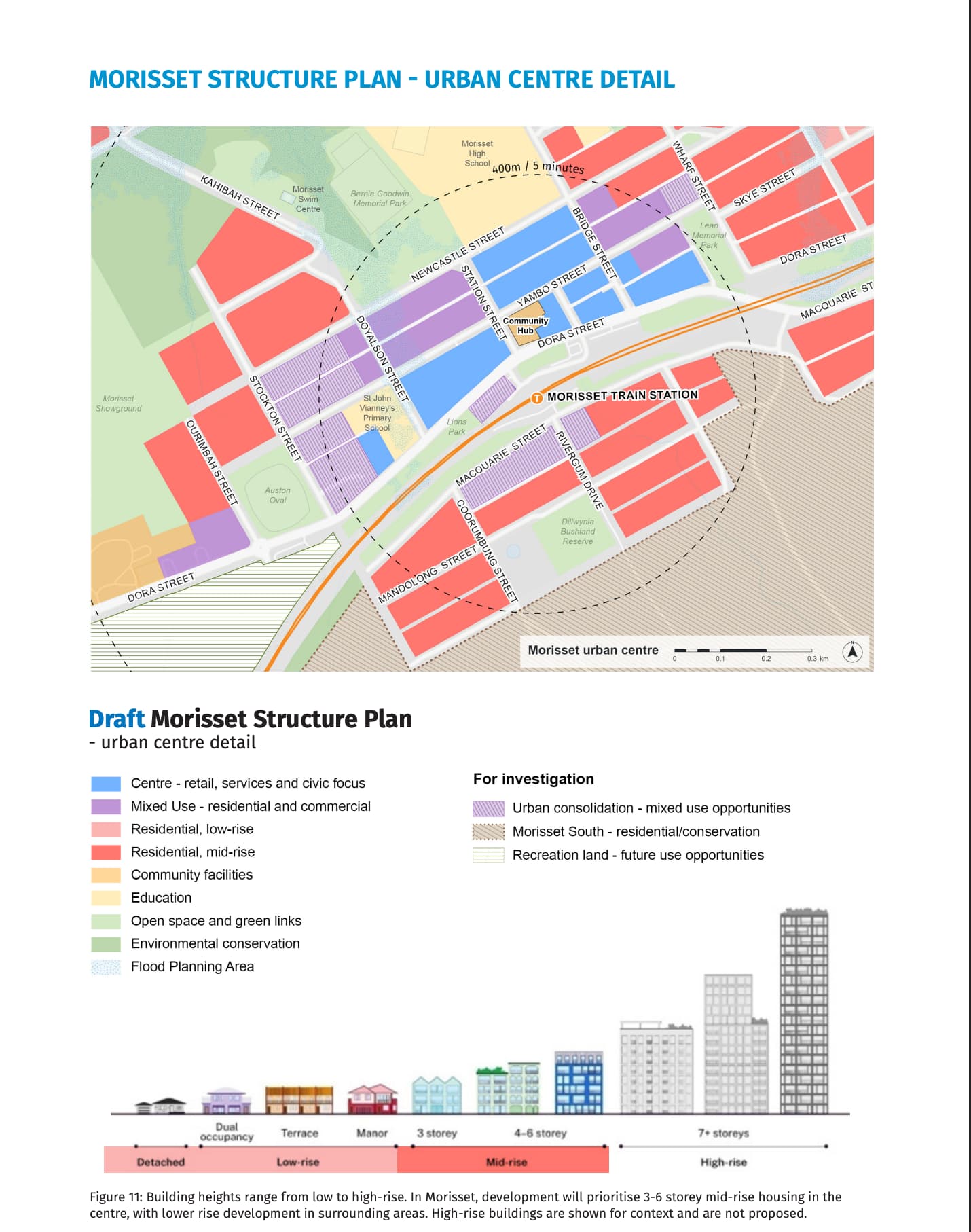
Read what that map is actually saying: mid-rise housing and a proper town centre going in around the existing train line to Sydney. That's density, services and commuter access being built in on purpose, the exact ingredients that pull the downsizers and commuters the population forecast is counting on. We didn't guess this was coming. The state government published it.
So who actually buys these houses next?
The same forecasts that show the population doubling also show it ageing. By 2046 the typical resident is 65 to 79: downsizers and retirees coming up from Sydney for lifestyle and value. That single fact dictates what we buy. Four-bedroom houses, in the right pockets, on the kind of block that suits that buyer, so that when it's time to sell, the largest group in the market is already lined up to want it. We buy for today's tenant and tomorrow's owner-occupier at the same time.
And the demand data backs it. In Cooranbong, four-bedroom houses pull about four times the buyer demand of any other home type: roughly 162 on the demand profile against about 40 for the next size down. When the biggest future buyer group and the deepest current demand point at the same product, that's the product you buy. Source: HtAG Analytics demand profile, Cooranbong.
What the three suburbs cost right now
| Suburb | Typical house | Past 12 months | Past 10 years |
|---|---|---|---|
| Cooranbong | $1,031,678 | +12.6% | +135% |
| Morisset | $1,017,147 | +15.7% | +120% |
| Bonnells Bay | $1,061,063 | +13.2% | +112% |
Source: HtAG Analytics, house dwellings, as at Q3 2026.
Five houses we bought here, and why
This isn't theory. It's where we've put real clients' money, across all three suburbs. Numbers below; client details stay private.
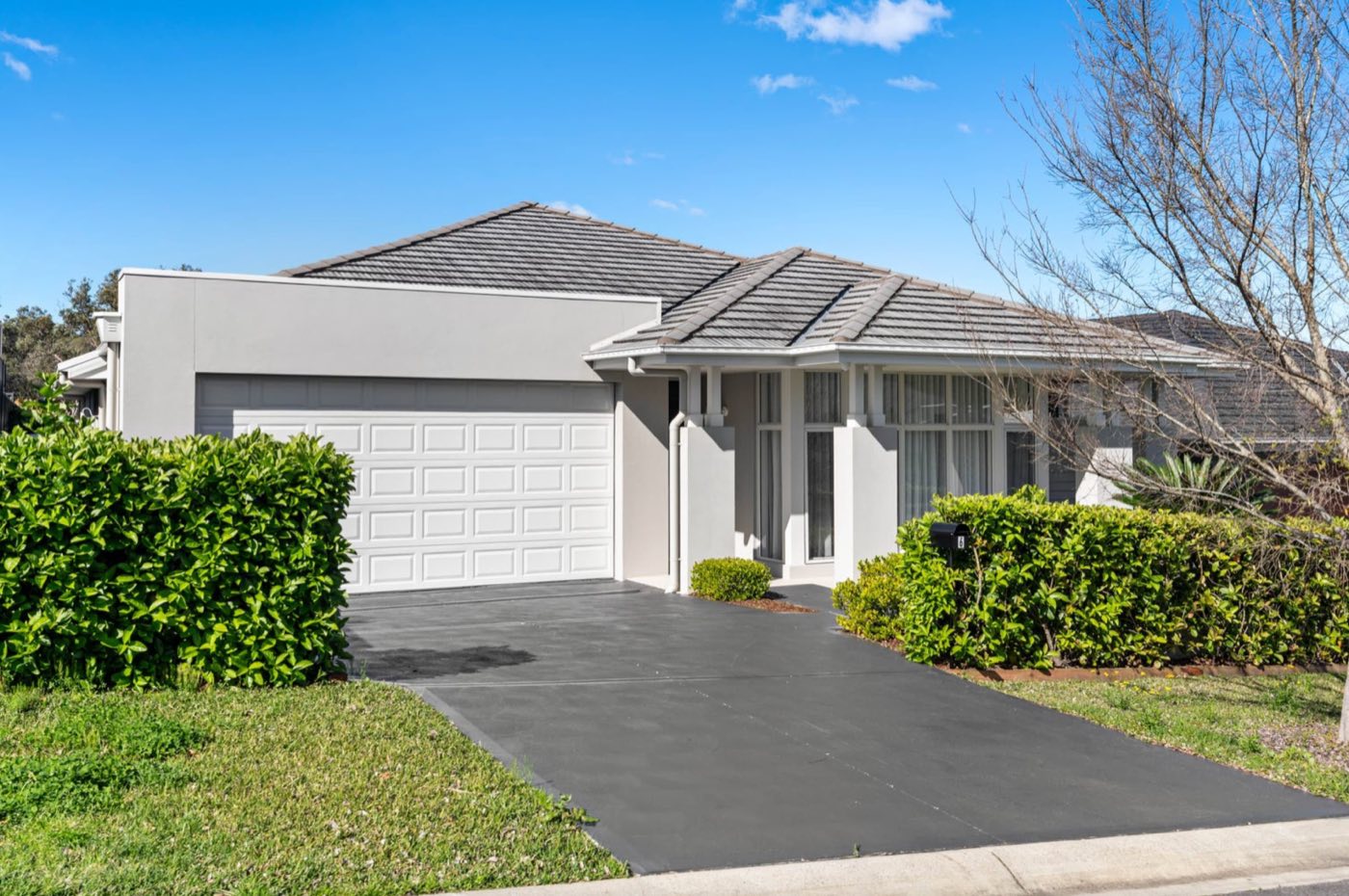
The forever-home play: bought at $1.1M and independently bank-valued $150,000 higher within ten months.
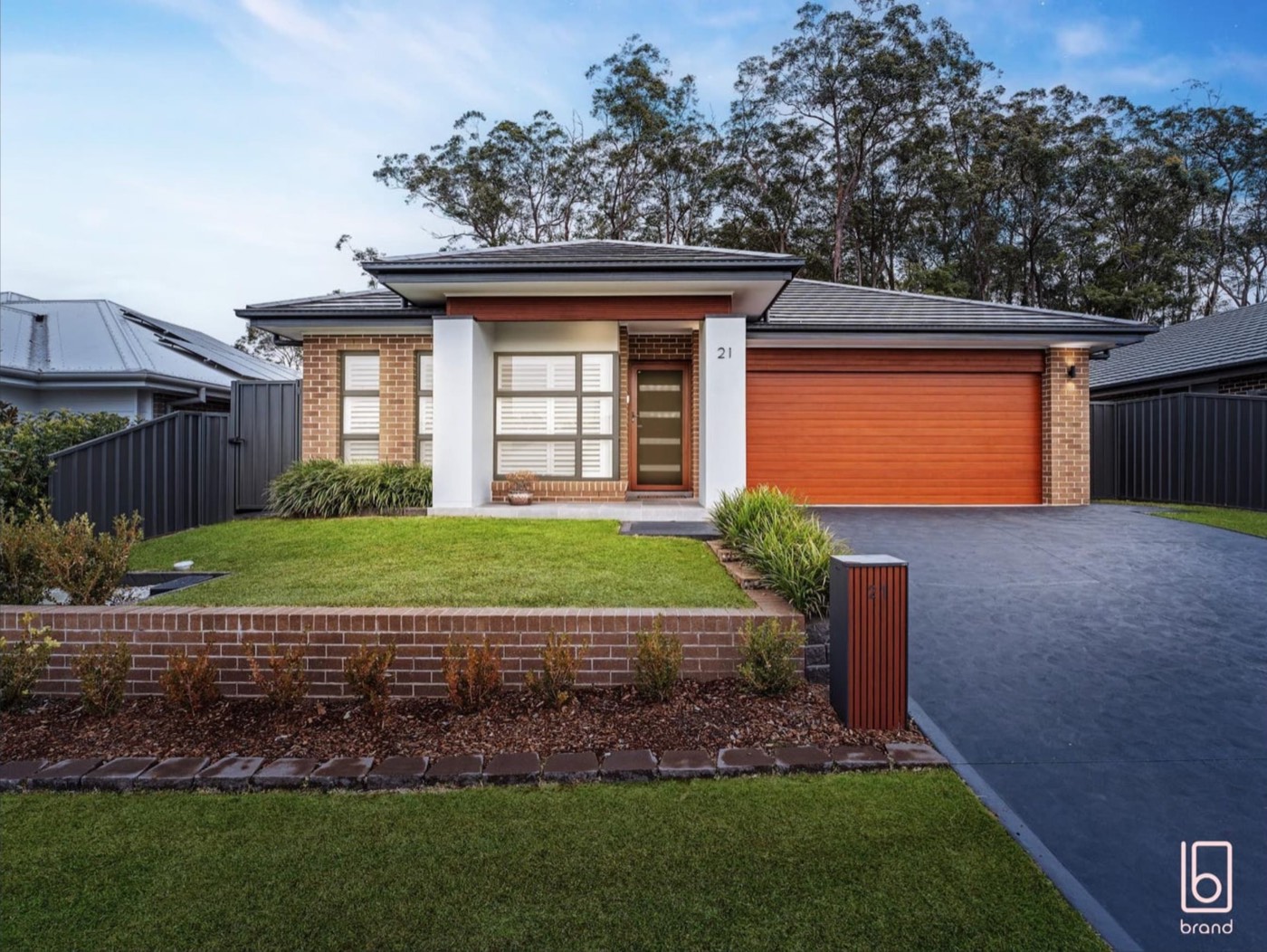
A near-new house secured at a million and leased at $920 a week, well above the suburb's average yield.
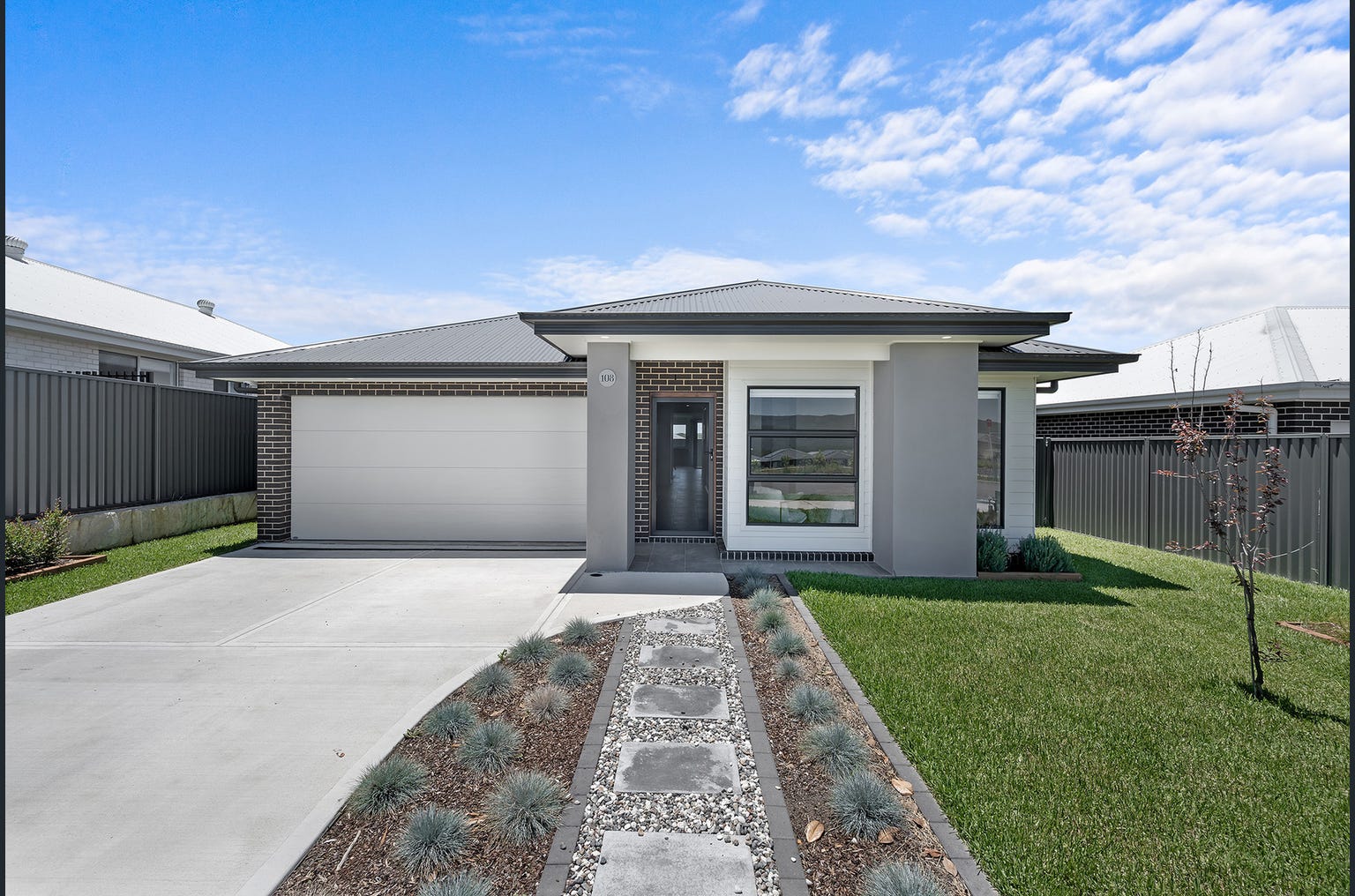
A third house in the same suburb, bought to a tight brief and tenanted quickly at $900 a week.
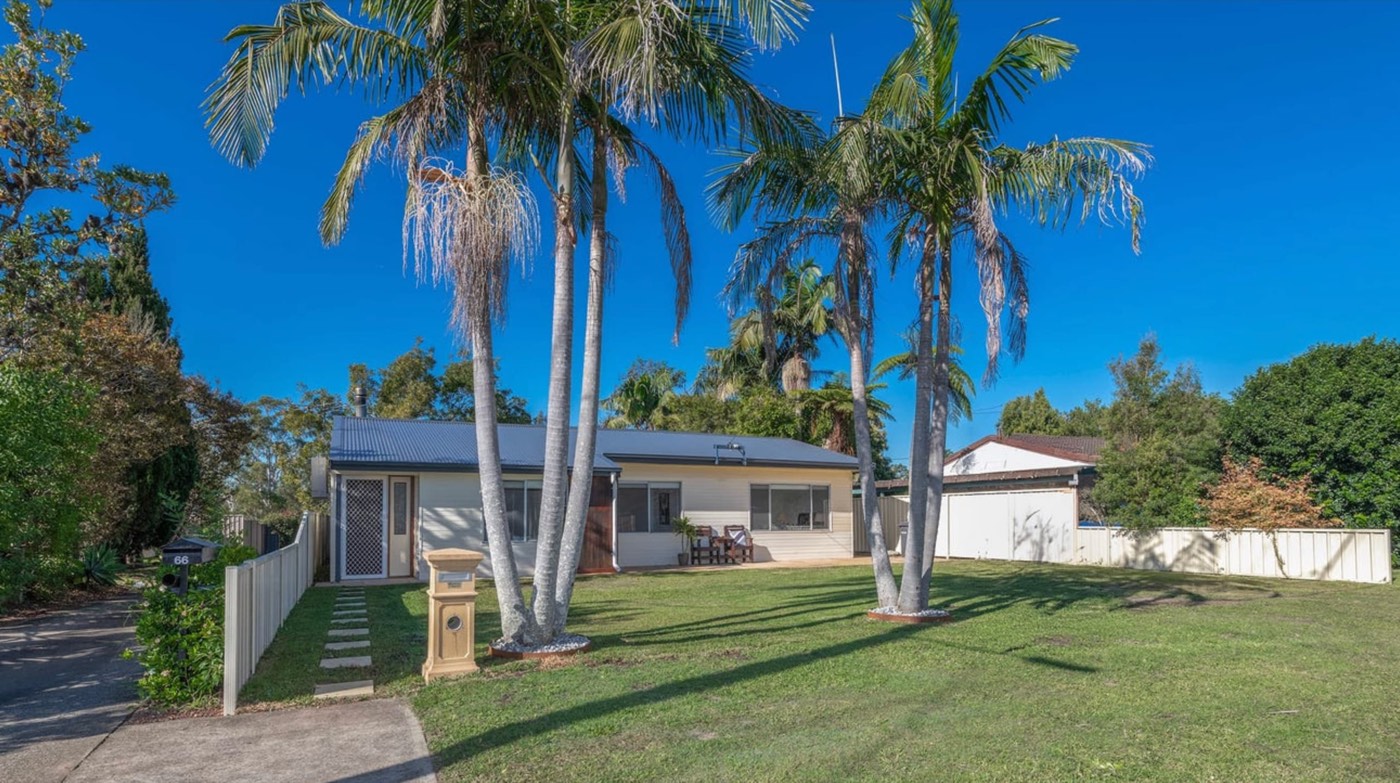
A 3-bed on 640sqm with a right-of-carriageway. We're adding a rear granny flat for dual income, all-in around $1.1M.
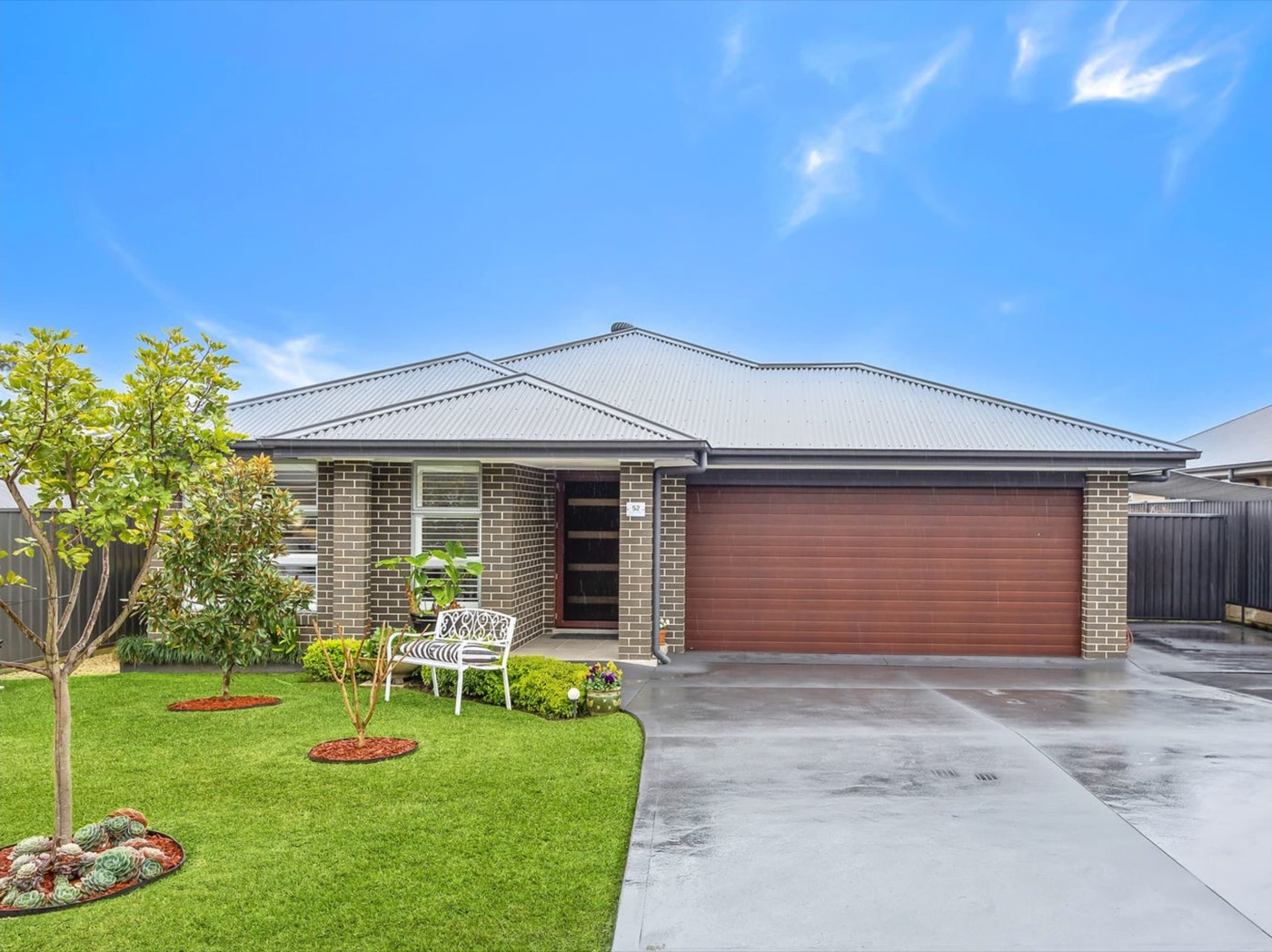
A Sydney family wanted residential exposure and a home for their parents. Strong growth if they moved in, a fast lease if they didn't. It did both.
Want this level of work on your next purchase?
This is the research behind one corridor. We do it before every purchase, in whatever market fits your goals. One conversation, no pitch. If we don't beat the bank valuation, you don't pay our fee.
Get MacKenzie on it Call 0485 048 187Questions buyers ask about this corridor
Is Cooranbong a good place to invest?
On the data it has been one of Lake Macquarie's strongest markets: house values up around 135% over ten years and 12.6% in the last year. The bigger story is what's coming. The Morisset-Cooranbong area is forecast to grow from about 18,000 people in 2021 to 38,000 by 2046, almost entirely through migration. That is a demand wave you can position ahead of, if you buy the right stock.
Why buy in the Morisset and Cooranbong corridor now?
Three things line up at once: supply is tightening, with building approvals down to about 48 dwellings a year and listing inventory at 1.22 months, well under the 3-month mark that signals an undersupplied market. Demand is accelerating fastest between 2026 and 2036. And prices still sit within reach around the $1 million mark. Tight supply into rising demand at an affordable entry is what drives growth.
Who will buy these houses in the future?
The forecasts show the area ageing toward a typical resident of 65 to 79 by 2046, driven by downsizers and retirees migrating from Sydney. That is why we buy four-bedroom houses in the right pockets now: they are what the largest future buyer group will be shopping for.
Is Morisset a government growth area?
Yes. Morisset is identified as a Strategic Centre in the NSW Government's Hunter Regional Plan 2041, earmarked for housing, jobs and infrastructure investment. That designation is part of why the demand forecasts for the corridor are so strong, and why the supply pipeline is being managed rather than left to chance.
How we researched this: market metrics (prices, growth, inventory, building approvals, demand profile) from HtAG Analytics; population forecasts from REMPLAN, prepared September 2025; planning and the strategic-centre designation from the NSW Government Hunter Regional Plan 2041; underlying demographics from the ABS. The five purchases are our own client acquisitions. We refresh the market data each quarter.
Best suburbs to live in Lake Macquarie · best suburbs to invest in Lake Macquarie · all recent purchases · buying in Newcastle